The backup device and controller have different jobs
The battery device stores energy and converts it into power for the connected rescue loads. The elevator controller evaluates its inputs and manages the rescue sequence. Those roles must be coordinated through the installation's power and control connections.
For the Dynavect LR750, the inverter produces pure sine-wave AC for the controller's rescue application. Required voltage, connected loads, and the interface must be checked together. A voltage match alone does not establish compatibility.
What happens when normal power is lost?
- Mainline monitoring. The LR750 monitors the supply while its battery charging and test functions maintain and assess the battery.
- Emergency power generation. When mainline conditions and the safety interface permit, the device isolates the mainline from the output path and generates emergency AC.
- Controller-managed rescue. The controller uses the available power according to its rescue logic and the installation's operating requirements.
- Status and return to service. The system uses power and status signals to manage the transition. The controller's documented procedure governs restoration of normal elevator service.
See the LR750 theory of operation for the device's specific behavior. This overview is not an installation or rescue procedure.
Battery lowering is different from continued elevator operation
A rescue power source is selected for the loads and time required by the rescue application. It should not be assumed to run an elevator through repeated normal trips or power a traction drive.
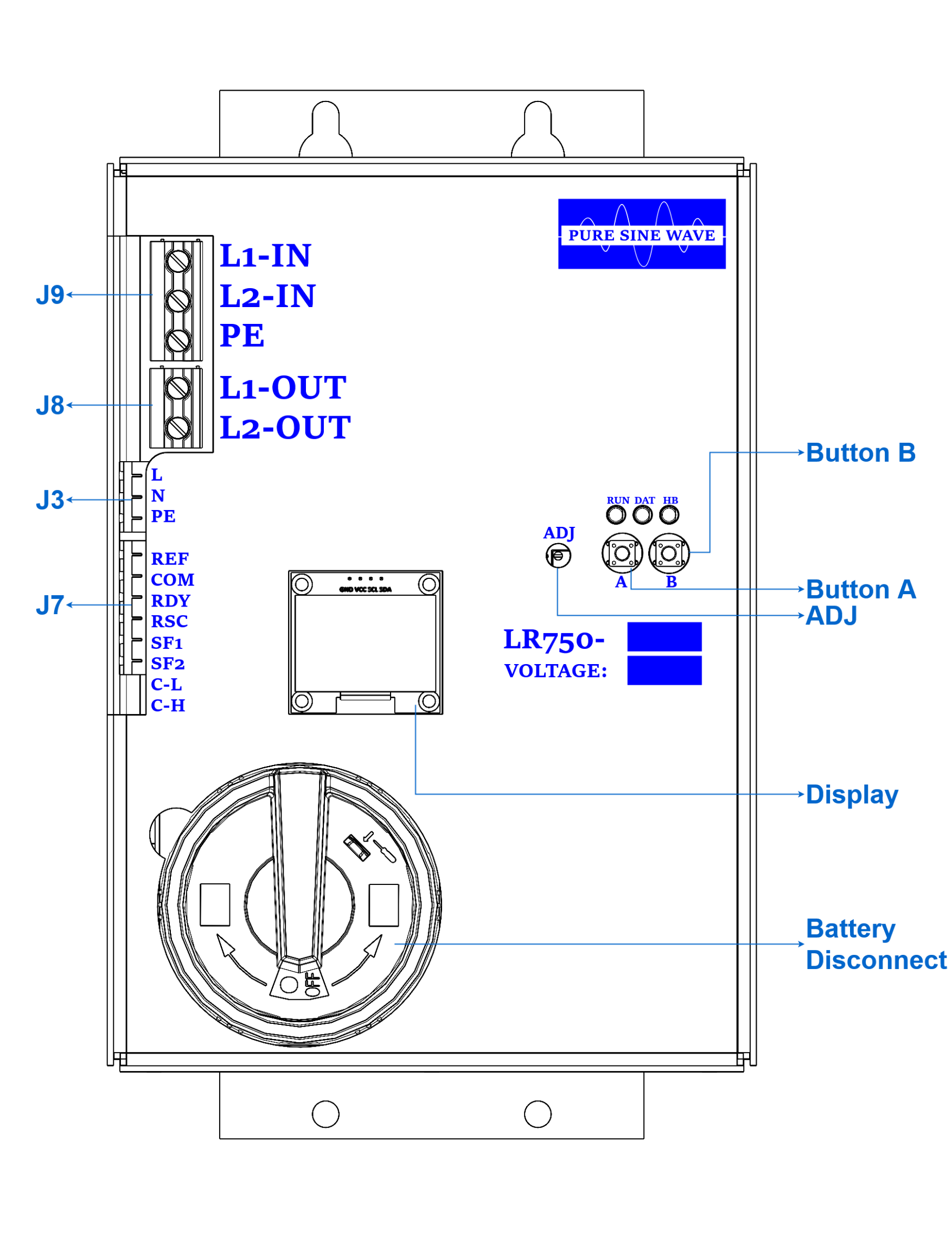
The LR750 manual lists 500 W output and nine minutes total runtime at maximum output, with generation stopping after three minutes and Button B restart. The cycle limit matters as much as the total runtime when evaluating a rescue sequence.
What should a buyer check?
- Hydraulic or traction equipment and the intended rescue mode.
- Required output voltage and the actual connected load.
- Controller interface, safety input, charger supply, and status signals.
- Cabinet dimensions, mounting, wiring access, and environment.
- Battery test behavior, operating limits, and current documentation.
For LR750 models, use the selection guide and manual, then have the application reviewed by the responsible elevator professionals.